Beginning the Work.

Featured

‘Work’ is such a tainted word.

It generally implies a lack of enjoyment, cumbersome activity and hours spent on things we would rather not be doing. At an age (22) where all too much of life seems to revolve around not having enough money, ‘work’ is often associated with getting by financially. Scraping through.  Working because you have to. Struggle street. Battlers boulevard. Grafters grove.

In the theatre world, ‘work’ is an entirely different concept.

The word simply reflects the action of putting in time and effort towards an open-ended, end. ‘Success’? A career? Being a better all-round performing artist and creative practitioner? These are fluid concepts. A good actor never stops learning, pinching snippets of ideas, nuggets of genius, taking inspiration, and being malleable to all kinds of change. In the theatre one must be open to shifts. ‘Better’ or ‘worse’ is an arbitrary line of thought; all that matters is committing to the work.
________________________________________________________________

One of my MA Acting classmates Brian Pater, a Portland, Oregon native, shared a wonderful piece of psychology/philosophy with me the evening before school started:
(To paraphrase…)

“There are four states of ability when it comes to any task, activity or skill.”

Unconsciously Incompetent (You’re bad at something, and you don’t know it.)

Consciously Incompetent (You’re bad at something, but you know it, and thus have a self-awareness which allows you to improve your ability.)

Consciously Competent (You’re good at something, but you can continue to improve and develop an expertise.)

Unconsciously Competent (You are so accomplished at something that it is instinctual and ingrained into your physical and mental memory.)

Meeting thirteen new actors,  all with different areas of expertise and inability has been a wonderful equaliser. In a school where so much is packed into such short time-frames, there is no time to be caught up in the concept of being ‘good’ or ‘bad’ at something. All that matters is being open to development, and getting out of the
‘Unconsciously Incompetent’ zone- regardless of which of the other three categories you fit into for any given class or exercise.
_____________________________________________________________

The first two weeks at Bristol Old Vic have been equal parts exhilarating and exhausting. Voice lessons, dance lessons, actors movements lessons, stage combat lessons, text project rehearsal, physical warmups, physical development, reflections, and bucketloads of learning admin all squeezed into one chaotic timetable. I keep bloody forgetting to breath. An absolutely chaotic first ten days, and we are barely getting started…

Accepting tutorship. Being committed to personal development and reflection.
Enjoying the fun and silliness wherever possible. Not trying to be clever or impressive.

Just doing the work.

JCL.

Winding Down & Ramping Up.

Hello Again!

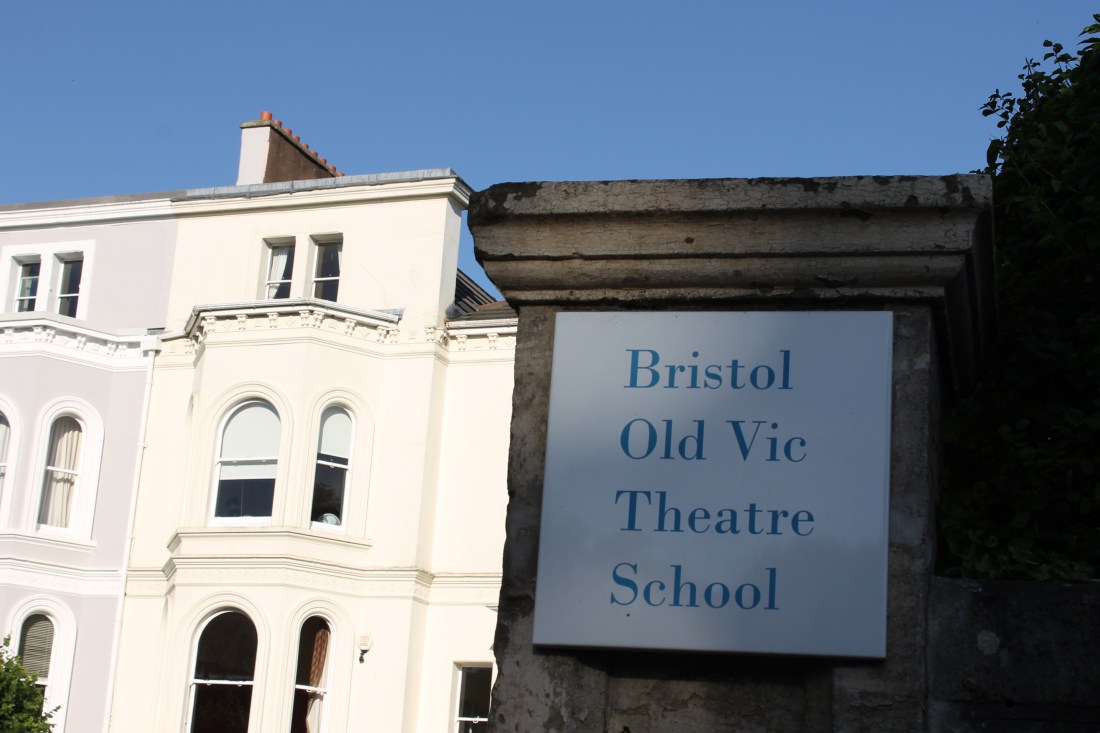
Somehow I’ve blinked, and there are only five days left in my time at Bristol Old Vic Theatre School.

A lot has happened since my last post, so below is a (fairly haphazard attempt at a) summary of the major things I have been up to.
___________________________________________________________
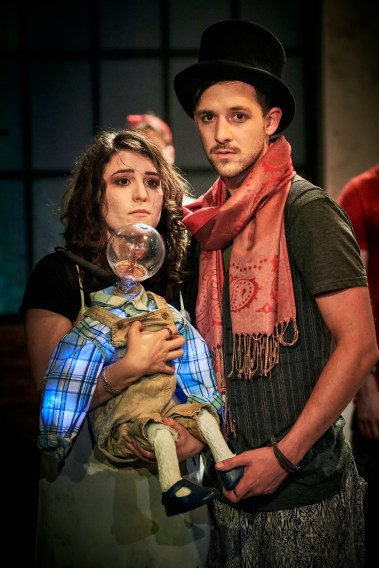
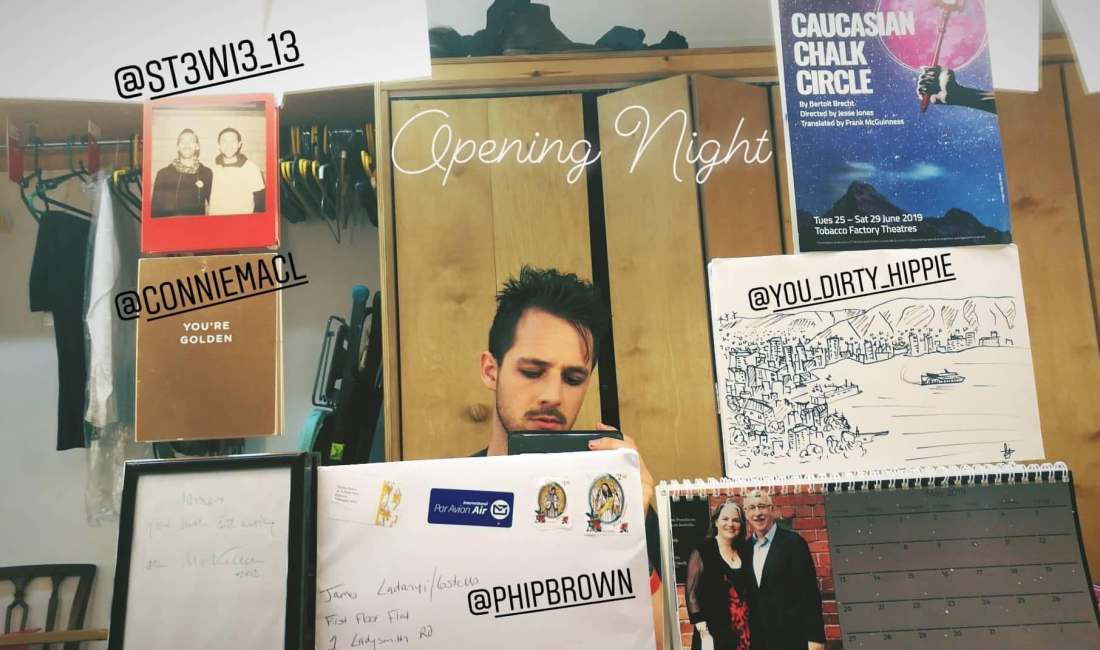
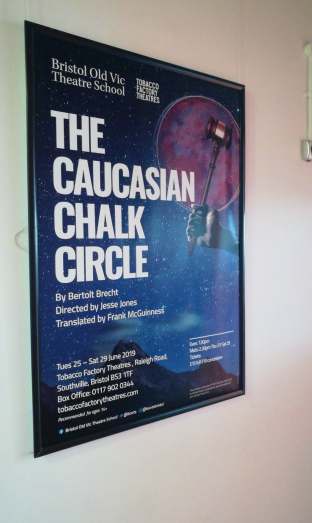
Firstly: a selection of photos from our seven-show season of Caucasian Chalk Circle at the Tobacco Factory Theatre. The show was a great success, and I was thrilled to finally have a tangible theatrical product to show to friends and family on this side of the world! It would be impossible task to describe the two-and-a-half hours of organised chaos that we put onstage, however I can reveal that the show included: five different musical genres (drum ‘n bass, western/country, house, acapella vocals, and soundscape), a live band, two hopper bikes, a supermarket trolley, an onstage orgy, multiple raves, a rope swing, faux cocaine use, a big jar of peanut butter…and a truckload of other weirdness. The general consensus was that we rejuvenated a theatrical classic in a way that audiences had never seen before. That’s about as much as you can ask for in my books!

Here a few of the reviews the show received:

https://www.intermissionbristol.co.uk/arts-coverage/caucasian-chalk-circle
https://www.britishtheatreguide.info/reviews/the-caucasian-c-tobacco-factory-17743
https://stagetalkmagazine.com/?p=20348

67952033_2217055818343183_5864212036581326848_n

C1B3A1

67876698_634967963665801_947648172669272064_n________________________________________________________________________________

Next: Over the couple of weeks that followed our production, much of our time was spent writing our ‘marketing reports’. This assignment was essentially our Masters thesis – even on a practical acting course a post-graduate qualification has to be include some vestige of written work! In any case, the marketing reports were left fairly open to personal interpretation and style, but were essentially the culmination of years work on our brand, self-marketing, casting types, and industry prep. My report included sections on figuring out my personal brand, logistical plans for tackling the industry after finishing my training, how to go about supporting myself as an artist in London, a bank of audition monologue material, plus a load of other waffle.

It may or may not have ended up at over 19,000 words…

Shades of the undergraduate history major for sure.
67642744_367235053941535_8338625429761949696_n
_______________________________________________________

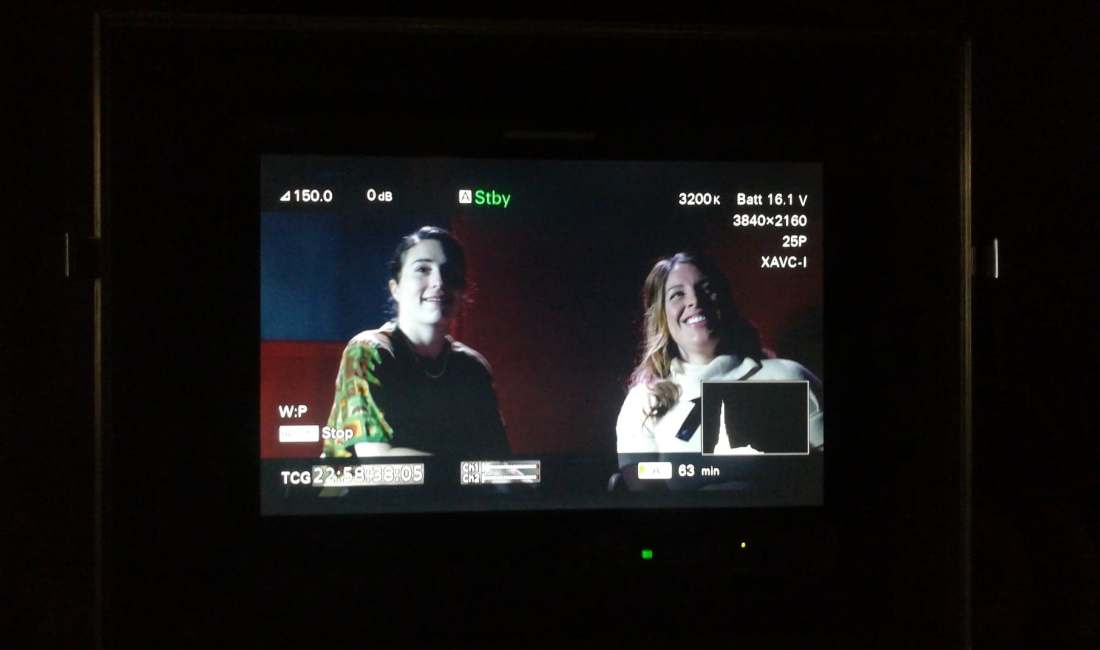
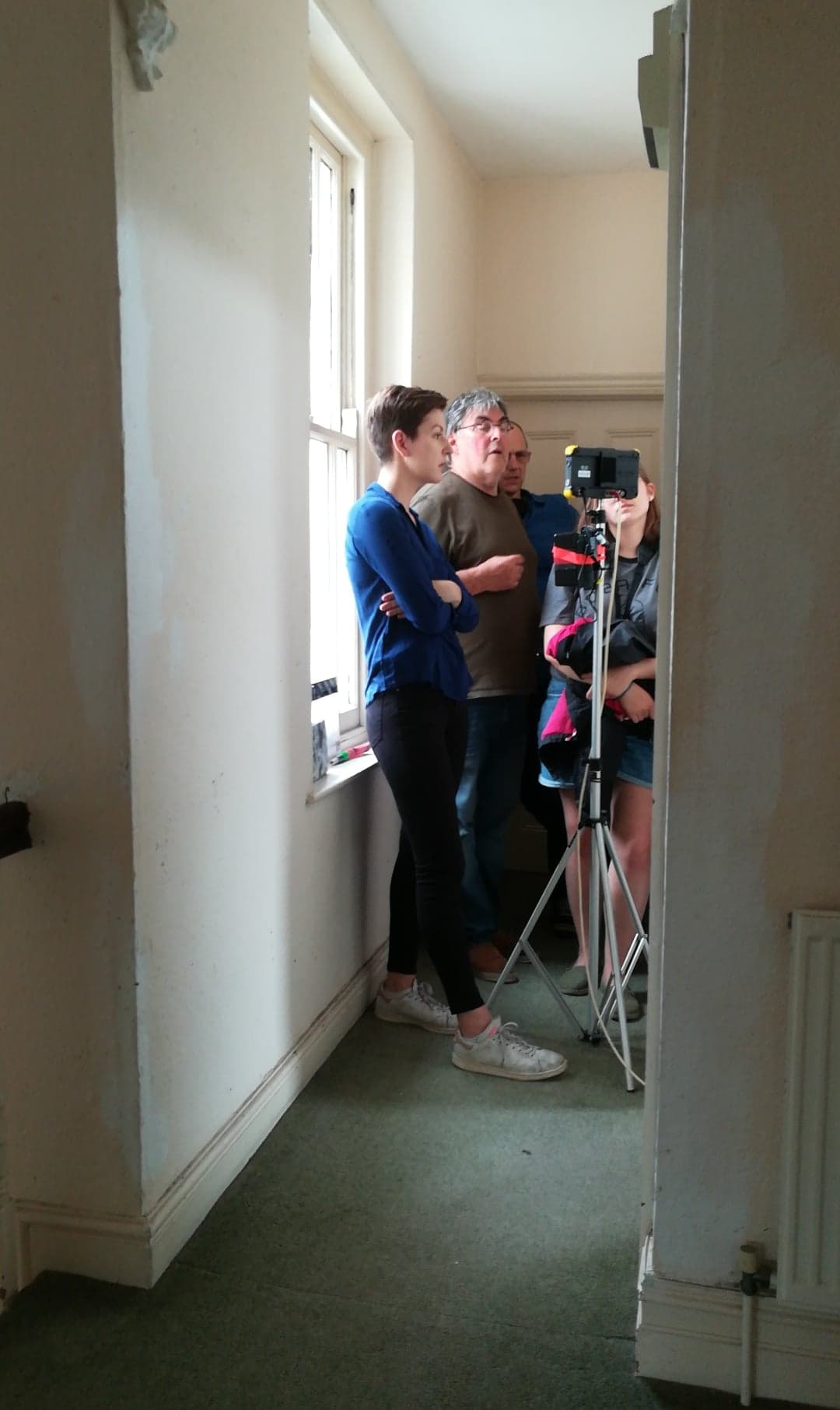
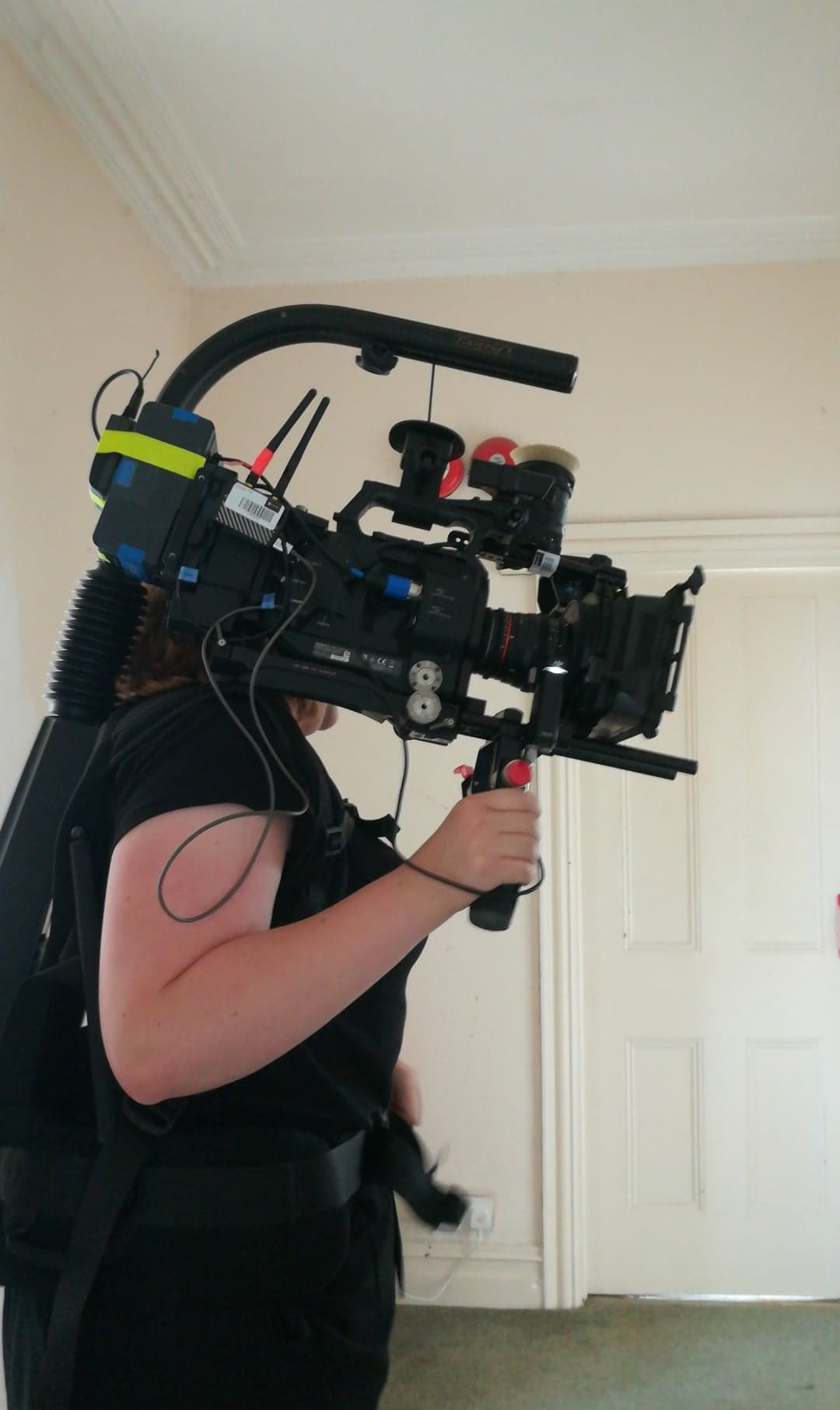
After finishing our marketing reports, the next big focus was shooting show-reel material. For those who are completely unaccustomed to the ins and outs of the acting profession, your show-reel is essentially an extension of your performance resume. It is customary for young actors to put together a written resume (with show credits, physical details, performance skills etc), but in a profession fundamentally driven by what you can do onstage or in front of a camera, words on a page only mean so much. Hence, show-reels: collection of short scenes or clips of an actor ‘doing their thing’ to be able to send to potential agents and casting directors. And being that the majority of the actors coming out of Bristol Old Vic (and indeed most drama schools) do not have professional material to put together a show-reel, the school does a wonderful thing in allocating time in our final term for filming scenes to use for just such a purpose.

Serious time and consideration was put into selecting two scenes, with different partners from our class. The goal in selecting a scene was to find something that could showcase the abilities of both actors, with enough going on to be an engaging watch, but without being grandiosely dramatic. While we were fortunate to have five-person film crew and a professional director (plus a high-quality camera) there wasn’t much of a budget for the shoots. So no heavy action scenes, Sci-Fi, anything requiring masses of extras, or anything really well known (i.e. not trying to remake Travolta and Thurman’s diner scene in Pulp Fiction).
67740903_820789908314611_1467372076280053760_n
67679744_917811021889357_4563260691661717504_n
67628224_1331143410400724_4429816156559245312_n

In the end I shot a scene from the film ‘50/50′, and one from ‘Like Crazy’. Each scene took half a day to shoot, with roughly three hours actually spent filming on-set. Of course there were twelve other scenes for the rest of our class, so the whole process took a week-and-a half.

What was I doing on the five days where I wasn’t needed for filming you ask…?
____________________________________________
Showcase.

The final task!

Like most drama schools in the UK, Bristol Old Vic organises an industry showcase for its graduating students at the end of their final year. The general idea is that the school uses its resources and connections in the industry, sending out invitations to agents and casting directors to come and see the graduating actors perform.

The actors want representation, the agents want to sign the ‘next big thing’- pretty simple equation.

But time is money, and industry big-wigs don’t want to sit through a whole show, so showcases typically take the shape of monologues and/or dualogues. For our London Showcase at the end of September (because agents are shlepping it down to Bristol for a forty-five minute gig) the seven of us who are able to work in the UK are each preparing two monologues, both approximately ninety seconds long.

That’s it.

Three minutes of ‘performance time’ to do your ‘acting stuff’. No pressure at all.

So, picking the right monologues was obviously a pretty crucial step. Researching pieces for showcase started waaay back in the second term, around March (I think). This entailed looking through the BOVTS play library, taking trips to London to browse the huge theatre sections at the National Theatre, and Foyles’ bookshops, and scrolling through the THOUSANDS of online plays on the DramaOnline database. With a task like this, I thought it was important to make a massive provisional shortlist. Basically anything that was moderately up-my-alley went into the big word doc.

Eventually, after a month or so, I decided that enough was enough (NO MORE LOOKING), and began…well…shortening the shortlist. I cut the options down to twenty-four (still an absurdly large number), then quickly went from twenty-four to twelve, then down from twelve to six in a single day, and finally down to the best two.

And this was all the way back in May! Thankfully I didn’t have any massive change of heart or late-onset paranoia about the pieces being crap in the last few months.
_____________________________________________

I won’t go into the specifics of the pieces I have chosen, but its worth quickly explaining the thought-processes that contributed to the final selections.

1) It needs to be a slice of you. 
– Strangely enough, showcase isn’t really about showing agents that you can act. In some ways that is kind of presumed. That you can, y’know, act. It’s more about presenting your personal, deeply individual niche. Showing the kind of person you are, flaunting your casting type, demonstrating what kind of roles are very…you.

2) It needs to make sense outside of the context of the whole play.
         – Whatever monologues you choose have to work as their own entity. They can’t rely on storytelling that the audience would have had pick up on over an hour of a play’s narrative. The relationships and character development of your monologues have to be interesting without the subtext of the play, which the showcase audience does not have access to.

3) They need to contrast.
          – Pretty simple really. You get two bites at the apple, so make the two bites different.

4) Open strong, finish strong.
           – Again, it sounds pretty straightforward, but worth noting. When it came to picking my final two pieces, one of the key elements that made both stand out was that they both have great opening and closing lines. With just ninety seconds to make a statement, having a killer opening and closing remark can have a massive impact.

_____________________________________________________

We have been rehearsing our showcase pieces for the last four weeks, and we have something of a dress-rehearsal at school this Wednesday, for staff and any students that are still around in Bristol (the BA and FDA courses finished weeks ago). The weird thing about this showcase preparation is that the real event isn’t for another five weeks after we finish on Friday. Everyone splits and does their own thing for over a month, before we come back together (the seven of us doing London showcase- there is also a New York showcase in October) a few days beforehand to refresh the pieces. A bit bizarre, but that’s the way it goes!

I’ve rambled on for ages, so I think I’ll leave it there.

It is bonkers to find myself in the final week of school, forty teaching weeks after starting last September. The time has truly flown by. I’ll save the emotional sob-piece for the next blog, no doubt I will be a wreck in five days time.

Just five days, and then its off into the big, scary industry.

Scary, but exciting times.

J xx

Final Production: The First Three Weeks

61736361_1991612210945127_8555703277449117696_n
And just like that, we are somehow already halfway through rehearsals for our graduating production of Caucasian Chalk Circle!

The last three weeks have been some of the most exciting, creative, sapping, and completely absurd devising work I have ever experienced as a theatre-maker. Bertolt Brecht’s ‘Epic Theatre’ masterpiece demands a certain level of crazy, and our director Jesse Jones (acclaimed founder of Bristol’s Wardrobe Ensemble) has been fostering an environment where any-and-all ideas are welcome. This has allowed a freedom wherein our show can continually evolve. When I think about what our vision for the play was just a week ago…

In a full-time rehearsal period, massive shifts can happen every day.

61354984_2146640525453838_7728860921224757248_n
______________________________________________
Perhaps one of the fundamental problems that Bristol Old Vic (and indeed many theatre schools, I imagine) faces is finding plays that can provide enough performance opportunity for a cast of fourteen graduating actors. Caucasian Chalk Circle has over forty characters, some with significant journeys, and some that appear onstage for only a few lines. In any case, it is an ideal show in that it gives everyone plenty to work with.

We were given an initial casting list a week before we returned to school/began rehearsal, with the proviso that everything was up for potential change, depending on the plethora of staging decisions that had to made. Thus, much of the first week of rehearsal was spent reading the play, discussing what character-doubling would and wouldn’t work, and casting the characters that had not yet been assigned. Our first full read-through was an experiment (to say the least), but we finished the first week with a decent understanding of the play as a whole (which has five acts) and our numerous roles within the story.


The goal of week two was to get some bare-bones version of the show on its feet. Each day we tackled one of the acts, and I’ve got to say we exceeded expectations in terms of how solid our concepts were by the end of each day. I completely agree with Jesse’s ethos that its much better to have a very rough idea of the whole show early on, than to focus on perfecting small sections of the show in the early stages. “If they have somehow f***ed up the date our season, and its next week, at least have something to show.” Obviously the show is confidential at the moment so I won’t go into details, but I can say that every day brought out new ideas of genre, style, music, movement and overall vibe.

Week three is yet to be completed (I’m writing on Thursday night), but so far we have been working on refining the through-lines and thematic elements of the show, doing a full stumble-through of the show to see which bits are good, and which are a complete disaster, and developing the musical elements of our show.
62059324_1057017521175071_106181512931573760_n
________________________________________________
Working on the show has been a refreshing change of pace from the first 27 weeks at Bristol Old Vic Theatre School. Our class has been itching to sink our teeth into a big project, and Caucasian Chalk Circle is certainly proving to be a mammoth task! There is a long, long way to go until we are ready to show to the general public at the end of June, but the skeleton of a brilliant show is there.

Further show diaries to come…

JCL xx

Spring, Rasaboxes & Haka.

…and we’re back. Spring Term 2019!

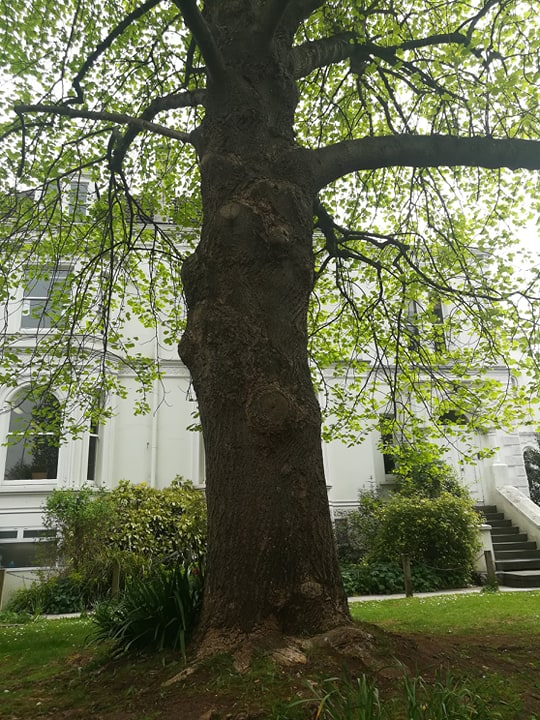
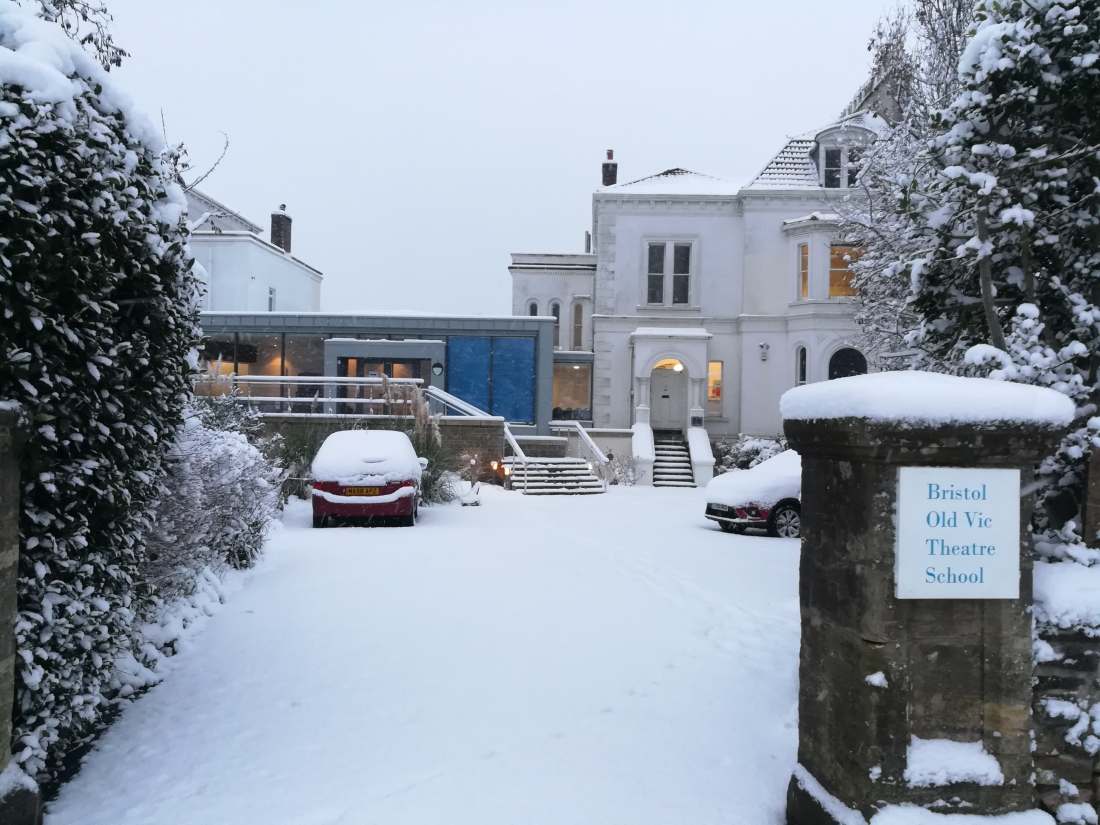
The sun is up when I get out of bed at 6.30, the flowers are starting to bloom, and the beautiful Japanese Tulip tree in the garden at Bristol Old Vic has been restored to its leafy glory.

It’s Friday of Week 2, and our class has been in somewhat of a holding period since we returned to school last Monday. Lots of bits and pieces of work, but it certainly feels like the calm before the storm. In ten days time we begin rehearsing our final production of ‘Caucasian Chalk Circle‘ by Bertolt Brecht. The show will be our (almost) sole focus for six weeks, until the seven show public season at Bristol’s Tobacco Factory Theatre from June 25-June 29th. To be perfectly honest, everyone just wants to get started on the thing now!
59388913_650363402059227_3819224995666591744_n.jpg
______________________________________________________
However, it hasn’t been complete thumb-twiddling over the last two weeks- never a dull (or relaxed) moment at BOVTS. On Wednesday we explored ‘Rasaboxes’, a system of movement and physicality invented by Richard Schechner in the 1980’s and 90’s.

“Rasaboxes offers performers a concrete physical tool to access, express, and manage their feelings/emotions within the context of performance”.

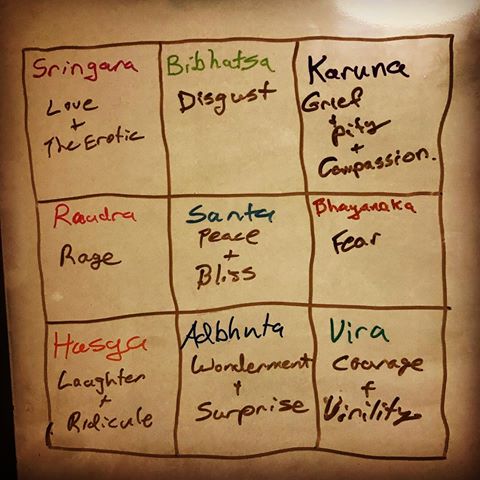
Rasaboxes originates from the Natyasastra – a Sanskrit text- that explores how eight key emotional states can be used in relation to theatre, dance and music. Blending ancient theory with contemporary emotional understanding, the goal of the methodology is for an actor be able to blend the body, mind and emotions into a single system for performance. The Sanskrit word Rasa, meaning “juice, taste flavour or essence” inhabits the work, suggesting at the ideology of visceral states of energy or emotion that we can feel (both in and out of performance contexts)- salty, blue, heavy, sweet etc.

The eight rasas are:

Adbhuta (suprise, wonder, awe)
Sringara (love, eros)
Bhayanaka (fear, shame)
Bibhatsa (disgust, revolt)
Hasya (laughter, the comic)
Karuna (sadness, compassion)
Raudra (rage, anger)
Vira (courage, the heroic, strength)

There is a ninth rasa, called Santa.
Santa is seen as the perfect balance of the other eight states – peace or bliss-.

30086248_221508508597210_6844133035894374400_n___________________________________________________________
In giving examples of the different rasa states, our movement teacher Michelle (without my prior knowledge) brought up haka as an example of Vira (courage, strength, the warrior). It was fascinating to have haka used as an example within an actor training context, completely removed from the environments in which the haka is most often used or experienced. All of Michelle’s points linking haka and Vira made complete sense. Vira is all about accessing the raw emotional surge that makes you feel powerful beyond your physical human form- feeling the surge of adrenaline that gives you a jab of other-worldly, animalistic, courage. Performing the haka gives you that in a unique way.

With only limited time available, Michelle quickly taught the rest of the class a somewhat simplified/dance-ified version of Ka Mate, which was then performed to a recorded version of the haka. The rest of the class were enthusiastic about the emotional uplift they experienced, however I didn’t think that a recorded version of Ka Mate quite does the haka justice. So I offered to lead a proper, live version of Ka Mate while my classmates did the version they had been taught.

This was a very profound experience for me.

To share an aspect of New Zealand culture with my friends and theatrical colleagues, showing a side of my national pride and upbringing that might otherwise never be seen, was incredible. Judging from the reactions of my classmates, it was quite a special experience for them too.

The spirit of the Vira Rasabox emotional state was certainly achieved.
_________________________________________________
In a bigger, non-theatrical sense, my experience of doing a haka for my class was quite moving, especially having been away from New Zealand for so long. It has now been 14 months since I left! Sometimes I feel quite removed from the current events and general social happenings going on back home, so it was nice to have a moment of connection with something so specific to New Zealand culture. I was transported back to secondary school haka competitions, playing rugby and watching the AB’s on TV with Dad.

For those two minutes the Kiwi flowed through me in its purest form.

And I was so PROUD to be a New Zealander.

JCL. xx

MoCap Vaults – A Two Day Introduction to Motion Capture Performance

This second Term at Bristol Old Vic Theatre School has been…manic. A gloriously chaotic three months of refining, rehearsing, not-sleeping and new learning. Sadly, the even greater work-load has translated into a fairly piss-poor effort on the blog post front; however, now that the holidays are almost here, I will try to make up for lost time!
_______________________________________________
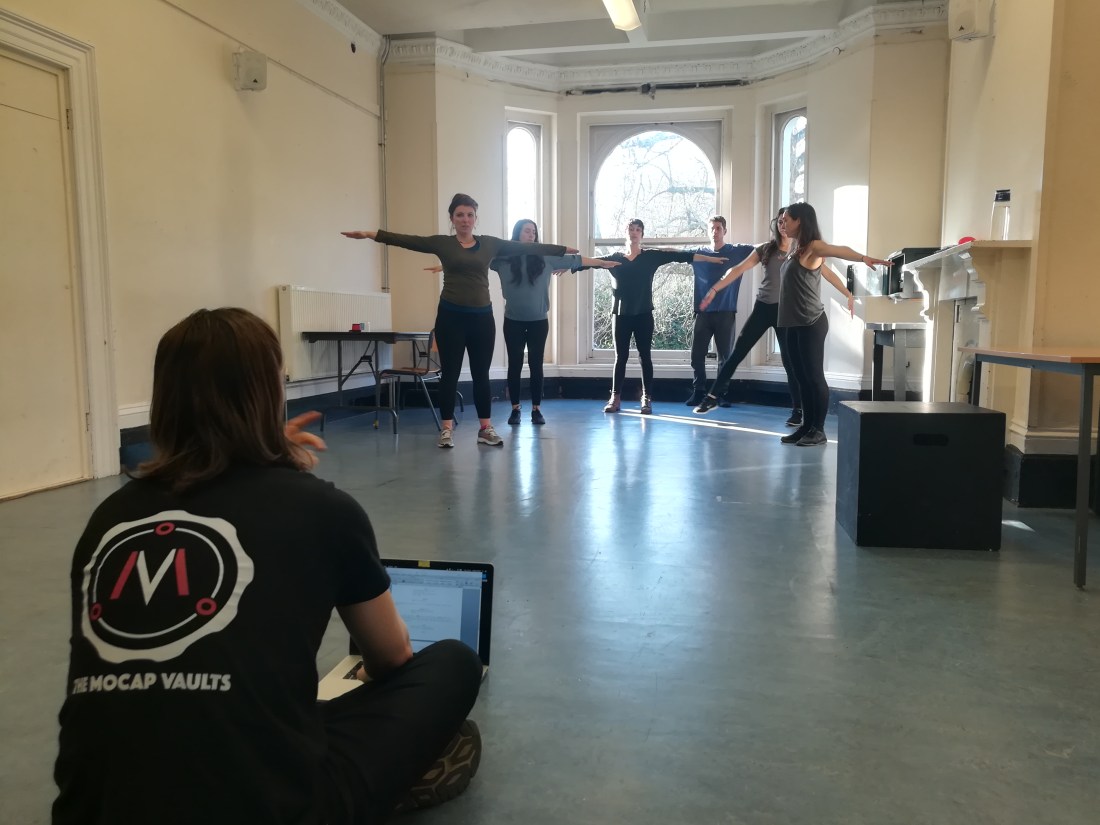
It is currently our last week of classes before a three week holiday, and our MA class has just finished a two-day intensive workshop with the brilliant Paul William Mawhinney of ‘The Mocap Vaults’ – a world renowned Motion Capture training company.
mocapvaults

It would be impossible to effectively condense sixteen hours of Motion Capture education into pure writing, so I will simply try to ‘pen’ some of the key features of our two-day workshop.

Motion Capture.

One of the very first things we learnt from Paul, is that the term ‘motion capture’ is actually slightly misunderstood by the general public. Most of what you think you know about ‘MoCap’- the funny suits covered in balls, absurd animal impersonations, head-mounted cameras- is all fairly accurate to the craft. However in its popular vernacular usage, ‘motion capture’ is often confused with what is referred to in the industry as ‘full performance capture’.

Quite simply- ‘full performance capture’ is when an actor’s physical movements, facial movements and voice are all captured simultaneously by data-tracking cameras to be used for animating a character- be it in film, television, adverts or video gaming.
‘Motion capture’ is when just the actor’s physical movements are captured. Andy Serkis’ iconic performance in the role of Gollum in The Lord of The Rings would classify as ‘full performance capture’, as Serkis was responsible for portraying every aspect of that character. Say, for example, Serkis had done all the crawling, prowling, and jumping for Gollum’s character, but (as a random example) Patrick Stewart had provided the voice for the role in recording booth sessions, Serkis would be described as having done ‘motion capture‘ for the role.

*This being said, within the rest of this blog post I will continue to use the term ‘motion capture’ as a general blanket term for both MoCap and full performance capture.

The Three Kinds of Motion Capture Technology.

There are three main strains of Motion Capture technology used across the entertainment industries. The first, and most well-known, is called ‘Optical’ or ‘Line of Sight’. This form is the most expensive, but produces the most specific and accurate data for film and game companies to work with. Long story, short: the MoCap performer wears a tight suit with lots of reflective balls on it. In a big, largely empty warehouse space dozens of infrared cameras capture the movement/change in space of the suit-balls in relation to each other. The camera data is then sent to computers which used software to replicate the skeletal shape of the MoCap performer. Brilliantly talented animators then do their thing, and the skeletal movement data can be manipulated and used to create fully-formed 3D graphic characters. Crucially to the Optical system- if the cameras can’t see the balls on the performer’s suit, then they can’t send data back to the computers. No folding your arms!

The second form of MoCap technology is ‘Kinaesthetic’. Slightly cheaper to operate than Optical, Kinaesthetic uses a similar ‘suit and ball’ system, however the tracking software is inside the balls themselves. Unlike Optical, where cameras do the tracking, the data is captured by the Kinaesthetic balls tracking how close or far away they are to each other (and therefore the relative body parts) to create a digital skeleton.

The final form is ‘Markerless’. This is used by lower budget productions, and components of this tech can be found on high-end smart phones. Think iPhone Animoji- the newest, most complex version of what began as Snapchat filters. This software can track how your face moves, and use that data to animate emoji creatures that posesses your facial habits.

Locomotive MoCap vs. Cinematic MoCap.

There are two main types of work a motion capture performer can do (in terms of how their work will be used by the production company that they are creating a character for)- ‘locomotive’ motion capture, and ‘cinematic’ motion capture.

The cinematic variety is typically what we typically think of most when imagining motion capture- an actor donning the suit, crawling around and saying the lines for a character, which is then graphically edited in post-production to create some (generally) non-human visual onscreen. Think Benedict Cumberbatch as Smaug, or War of the Planet of the Apes. In a sense, ‘cinematic’ MoCap is like shooting a normal film- actors perform in character, generally with dialogue, which gets edited and is used in the final cut of the film.

Locomotive’ MoCap, however, is more specific to the gaming medium. Unlike movies, modern games (at least ones that use MoCap in their development) require more than just scenes to create the final, consumable product. In-game characters are manipulated by the human player- running, jumping, attacking, using weapons, turning etc- in hundreds of different variable ways. So in order for a game to be able to have all these movements and actions available to a player, the game designers need to have the motion captured data of how each character completes these actions. Which means… a motion capture performer has to record

Every. Single. Version. of. Every. Single. Movement. a character could need…

Now of course lots of game-play is repetition- for example, a character generally walks in the same way.  And of course, not all gaming companies can afford to use motion capture technology in making their games, but you can see how the ones that do require A LOT of hours of performance work from their motion capture performers.

Base Pose / Idles / Idle Inserts

As I said at the top, there is far too much information to put into a blog post, however I want to quickly explain some of the actual motion capture performance work we did within our workshop- as a taster for the kind of physical acting required to be a motion capture performer.

When recording ‘locomotive’ motion capture’an actor will have what is called a ‘base pose’ for his or her character. Think the default position that a video game character adopts when it isn’t doing anything. To be incredibly generic- a dwarf might be hunched, a pirate might be slouched, Spider-Man might be on the balls of his feet.

The first step a MoCap actor has to take in creating a character is to figure out it’s base pose. How does he/she/it stand. How confident am I? What is my posture like? How symmetrical is my body? Where do I hold my tension? Every character will be unique, just as every creature and person in reality is unique, however generalisations are your friend in motion capture. Base Pose is not about creating a nuanced performance- it is about finding a way to hold your skeleton that will A) effectively get you, the actor, into the body of the role you are playing, and B) give the data-capturing cameras a default state from which every physical change in your performance/character can be measured against.

An idle is the next stage on from a base pose- how does your character hold itself in different emotional states? For example, if a performer had to do MoCap for Spider-Man, the idle for Peter Parker and Spider-Man would be drastically different. The game developers would also likely need a ‘combat idle‘- how Spider-Man holds himself in a stationary state when he is about to fight. Or a stealth idle’, for when he is about to crawl around behind unsuspecting enemies. All these states-of-being have to be fully realised, incredibly specific and memorised such that the performer can go back to them over and over again for different takes. I won’t elaborate any further, but if you can process just how complex this sounds just to create the data needed for a video game character to stand still…think how much time and effort goes into capturing the data for every jump, turn, weapon attack, crouch, physical reaction and movement of a fully fledged character…

It is a lot of work, but fun as hell!!!
______________________________________________________
I hope this has been an interesting, albeit not-too-wordy insight into the very basics of Motion Capture performance. Our two days working with Paul from MoCap Vaults were truly incredible. Learning just how specific and meticulous an actor has to be to effectively perform MoCap was a massive learning curve. I had such a blast and I hope to take my MoCap training further by doing more training courses with the MoCap Vaults company in London in the near future.

…and hopefully don the suit…

JCL

sdr

A Day in the Life at BOVTS.

52678078_563914057446086_8763628661497659392_n
As I approach day #100 at Bristol Old Vic Theatre School, I realise I haven’t yet provided any description of what a typical day at BOVTS entails…
About time I remedy that!

But first, an introduction to my wonderful class of fourteen. In our MA Acting course there are ten women and four men (including yours truly).

The women are:
Alice, from Sydney, Australia
Avery, from Portland, Oregon
Claire, from Toronto, Canada
Darby, Indiana born, New York & Los Angeles based
Freja, Danish born, New York based
Jessie, New Jersey born, New York based
Leerin, from St Louis, Missouri
Marine, from Montreal &
Rachel, from Los Angeles

The men:
Adam, from New Orleans, Louisiana
Brian, from Portland, Oregon &
James, London born, Qatar based
_________________________________________________________
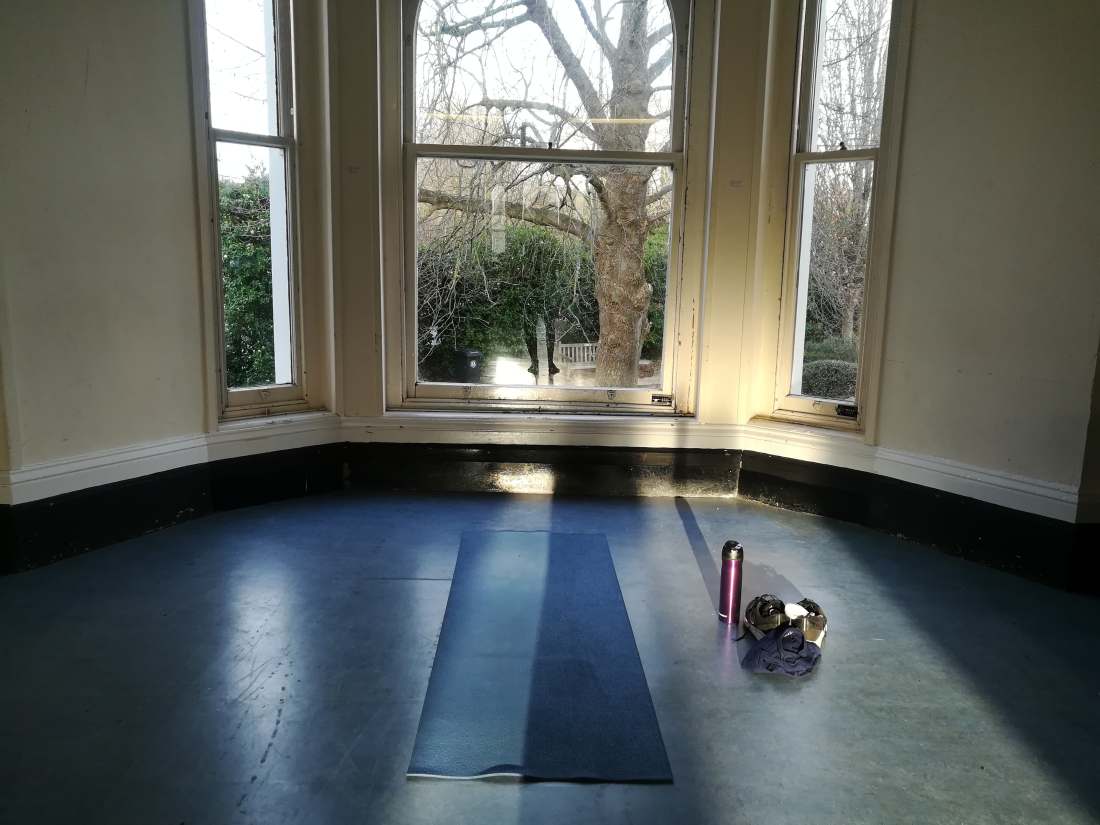
Days at school officially start at 8.45am, although we have to be signed in by 8.40 am. However, this term I have been arriving early around 8am for an extended personal warmup. This usually involves fifteen minutes of Yoga in one of the studios, followed by ten minutes of vocal exercises or singing practice, and ten minutes of stretching.

53392849_2115049368585513_1957327767720689664_n

8.45 – 9.05am: Group ‘Limber’ warmup.
This entails an upbeat physical dance routine, vocal limbering (spinal rolls, facial stretches, warming up the articulators etc) and group singing exercises.

9.05 – 9.15am: Scramble Time.
Filling up water bottles, dashing to the loo, just generally getting my s*** sorted for the morning classes. I have gotten progressively worse at checking the timetable ahead of time (although I bring everything I might need for any class every day regardless), so I often use this ten minutes to see what we have in store for the day. Each day is broken down into six one-hour blocks, usually with a mix of single-session classes, and longer ‘text project’ sessions that can last two or three hours.

9.15 – 10.15am: Class One 
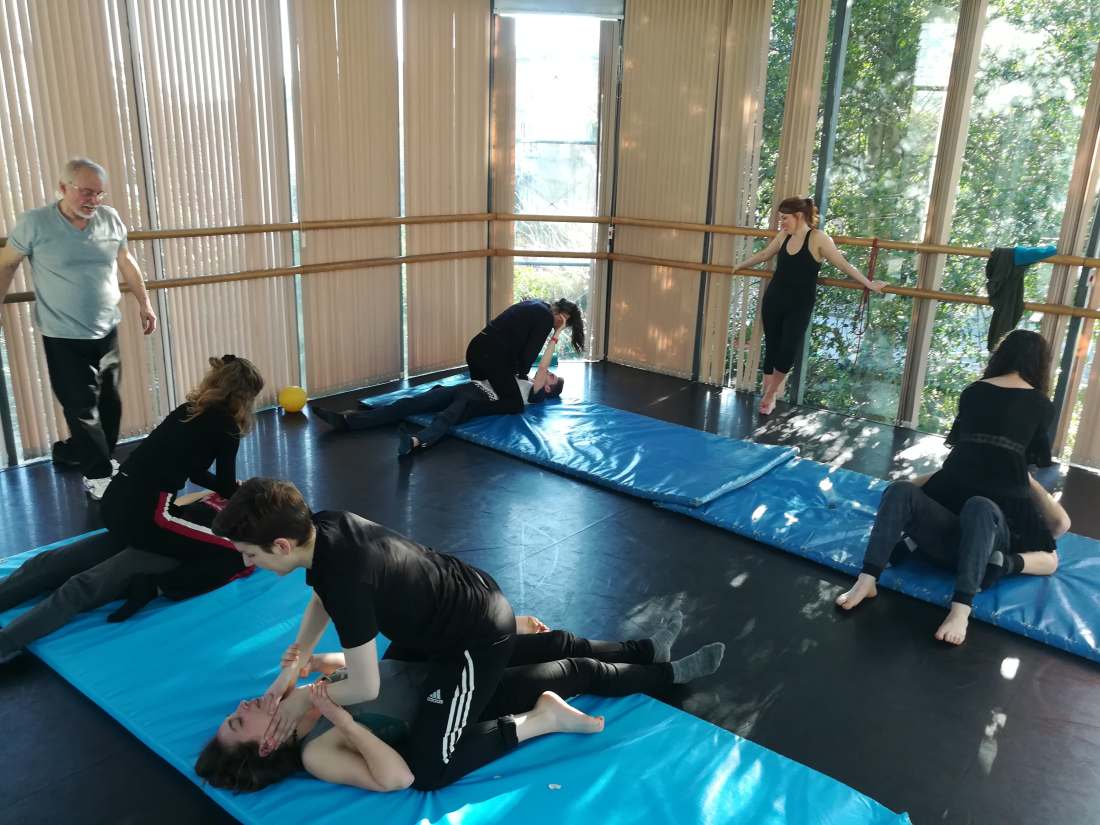
This Monday (Day 89/Term 2/Week 7) we had Actor’s Movement with our teacher Michelle. A movement class can entail anything from Yoga, exploring the Laban choreographic methodology, ‘Animaux’ animal movement, physical-contact duo work etc. In this particular class we spent the first thirty minutes learning a sequence of bird-inspired balance positions, and then for the second half we paired up to devise short movement sequences based around how lovebirds (the literal bird species- Greek name Agapornis) interact with each other.

10.15 – 10.30am: Scramble Two
Snack. Loo. Manic.

10.30 – 11.30am: Class Two
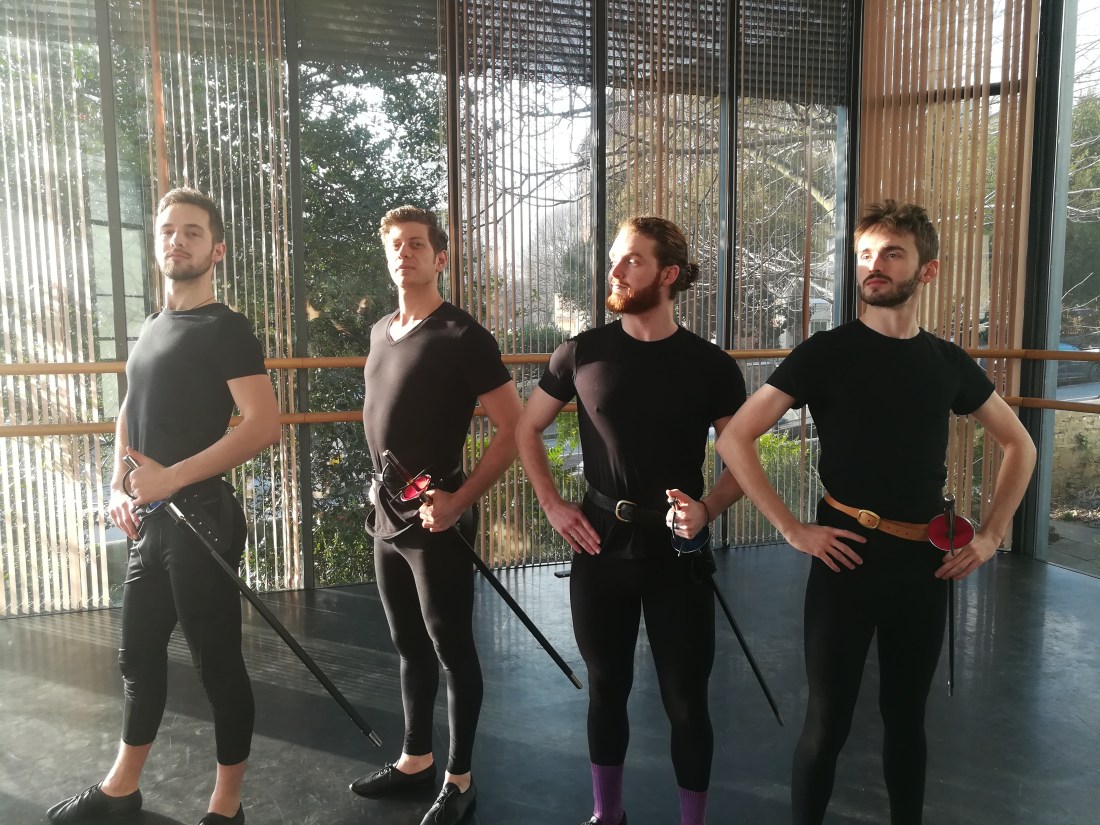
Class two on Monday was Stage Combat with Bristol Old Vic stalwart, and Head of Movement, Jonothan Howell. J. How has been teaching Stage Combat for forty years- the man knows his stuff. He likes to keep us guessing as to what any given class will cover, so its usually a case of turn up and find out! In this particular class we continued our work on unarmed combat, specifically exploring a sequence of grips, containing an attacker, headlocks, the illusion of head-punches and groin kicks for the stage.
52967817_1029665757217055_1721930703400075264_n.jpg

11.30 – 11.45am: Scramble Three
Loo. Snack. Not enough time.

11.45 – 12.45pm: Class Three
Class Three on Monday was Voice with Carol Fairlamb, Bristol Old Vic’s lovely Head of Voice. We had just finished a text-project of Three Sisters by Anton Chekhov the previous Wednesday, and in reviewing the project from a vocal lens, many of our class had reflected on the challenge of ‘getting colour into the voice’ when playing characters of different gender and/or age to themselves. To help this exploration finding vocal variety, Carol brought in a poem- Invinctus by William Ernest Henley- for us to dissect. Pitch, Pause, Punctuation, Power, Character Intention, Given Circumstances; to name but a few possible elements an actor can use to ensure a poem isn’t one dimensional.

12.45 – 2.00pm: Lunch
Lunch is 75 minutes on most days, which can sometimes be way too long, and on other days can feel like nowhere near enough time! On Mondays, Wednesdays and Fridays I usually go on short run at the start of lunch, typically 3km or so on the beautiful Clifton Downs that are right beside school. I am usually back at school by 1.10pm to eat, have a shower if it has been a physical morning, chill out with students from the other acting classes, and have the always crucial 1.45pm coffee.

52821672_2141679982811198_2824773370371899392_n

2.00 – 3.00pm: Class Four
In what was a timetable irregularity, we had Carol Fairlamb again after lunch- however this class was dedicated to exploring Shakespeare’s Sonnets. In two weeks time we have a Sonnet performance evening with the first year BA (3 year degree) and first year FDA (2 year degree) students, where we will all be performing two sonnets (I have chosen #23 and #34). In this particular class Carol went over some of the basic linguistic structures and techniques used by Shakespeare in his Sonnets, encouraging us to delve deeply into the specific word and punctuation choices that he has made in our pieces. Probably the most valuable point that I learnt was regarding enjambment- where Shakespeare ends a line without punctuation, implying that the thought flows into the next line. I was very familiar with enjambment, however this class was the first time I had heard a teacher suggest that an actor should never breath after a line with enjambment. Carol suggested that as rule (in Shakespeare’s plays and sonnets alike) the next breath should only be taken on the first stressed syllable of the following line. Things learnt! 

3.00 – 3.15pm : Scramble Four
Sit down. Fresh air. Snack.

3.15 – 4.30pm: Class Five
Our fourth session on Monday was Acting Basics with Head of Acting, Paul Chesterton. This class was a continuation of a previous session in which we had been exploring the ‘States of Tension’ methodology of theatre practitioner Uta Hagen. To very briefly summarise what has been (at time of writing) now five hours of classwork into a couple of sentences: States of Tension is a way of framing how a character is feeling at any given moment on an eight-stage scale- stage one being the least amount of tension, and eight being the most. Titles of the stages can vary, but the wording we have been using are:

1- Catatonic
2- Californian
3- One Thought
4- Neutral
5- Is there a bomb in the room?
6- There IS a bomb in the room
7- Your worst fear has appeared in front of you
8- Rigor Mortis

In this particular Monday class we spent most of our time looking at states 6 and 7, particularly what it is to have your body be completely gripped by fear, tension and concentration simultaneously. In one exercise we as a class spent ten minutes crossing a fifteen metre room, at a painstakingly slow pace as if crossing a minefield. The amount of sheer focus made for an unreal ensemble experience.

3.15 – 4.15pm: Scramble Five
Snack. Water. Loo.

4.30 – 5.30pm:  Class Six
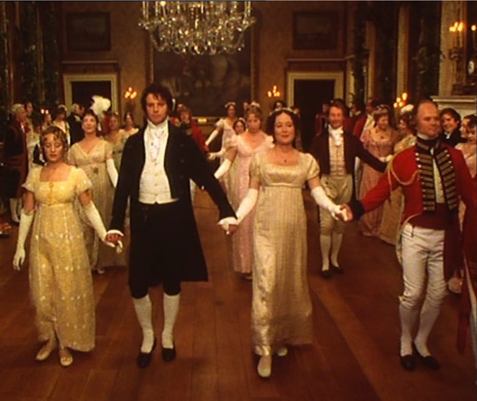
To cap off the day, we had a Period Movement class with (again) Jonothan Howell. In Period Movement we have been moving through the 13th-19th centuries, exploring different historical dance forms. Currently we are looking at the early 1800’s period, and so naturally Pride and Prejudice provides quality content to be examined. We have recently been focusing on the famous dance scene between Mr Darcy and Elizabeth, in which the two main characters exchange sparring dialogue whilst engaging in a group dance with the other ball-goers. Period Movement is always one our more lighthearted classes, although the content that we cover is very valuable for our overall theatrical education, particularly for working in Great Britain!
pp197-large

5.30pm : Day Done!
…That being said, I often stay at school for another hour or so for extra combat practice, individual singing work or any of the hundreds of ongoing tasks.

All in a day’s work…

JCL xx

‘The Fridge Theory’~ getting away from the results-based mindset.

rapier and dagger (2)

I’ve written quite a lot about process vs. results in my previous blog posts, and for good reason. These two words are perhaps the most omnipresent descriptors of the drama school process. We learn new skills, develop familiar skills, and perfect old skills; this cycle continues as our training merely becomes more intense and complex.

But even after 15 weeks, it is still really, really difficult to get away from what my classmate Alice Birbara calls ‘the results-based mindset’.

As human beings, are brains are hardwired to focus on the end-game.
The result.             The goal.              The successful outcome.
(I have no scientific basis to substantiate this statement, other than seeing it in consistently in EVERYONE in daily life). Even when we think we are focusing on ‘the process’, usually we are only feigning interest in a process-based thinking in order to achieve the relative result that we crave.

We struggle to just do…and to enjoy the simple process of just doing.

The only sphere of human life (that I can think of) that doesn’t revolve around results is genuine, relaxed leisure time. Reading a book. Walking your dog. Lying in the sun. All of these are examples of things that you just do for the simple, exclusive reason of knowing that you will enjoy the experience. It seems silly that this level of uninhibited enjoyment isn’t applied (by myself and others) to what is unquestionably one of the most pleasurable, fun and inspiring experiences of my life- studying at drama school.
____________________________________________________
Making dinner is a leisure activity that I think very clearly reflects the benefits of getting away from the results-based mindset.

I love to cook. In my younger years I was intent on becoming a chef. I love ingredients, different cooking methods, and the satisfaction of plating up a delicious meal. But in reflecting on the hundreds of dinners that I have cooked over the last few years, I realise that the process can be vastly different depending on a couple of simple factors.
On the occasions where I have been super intent on making a specific dish, and it being ‘good’, two outcomes are almost inevitable:

1) There is far more pressure to succeed,
2) The result usually doesn’t live up to the expectations.

However, if I just walk into the kitchen knowing that I have ingredients to work with, and an ability to cook good food, I can simply open the fridge, pick a few things to work with and just cook.

More often than not, this kind of cooking process brings me greater joy than the alternative mindset, and almost always produces far tastier food.

(This is partly why I never use recipe books when cooking. I sometimes gather inspiration for flavour combinations from recipes, but I think one’s cooking experiences is doomed from the get-go if you are fundamentally trying to replicate something that a professional has made with far more time and help than you have available to you).

_______________________________________________
This thought, named The James Fridge Theory’ by one of my teachers, is completely applicable to acting and performance training.

If you go into a rehearsal or audition intent on ‘being good’ or achieving a particular version of yourself, not only is there more pressure to perform well, the performance quality is often negatively affected by that very attempt to be good.

What a stupid, self-restricting cycle.

The alternative for an actor is to step into the studio/stage/kitchen, knowing that you have the requisite talent, intuition and ability to make a great product- be it a lovely Moroccan couscous salad or a compelling Shakespeare monologue. In simply consulting your fridge, selecting some appropriate ingredients, and trusting the rest of the process to just happen via your years of practice, chances are the result will turn out pretty well.

~ JCL

The Problem With Timelines & Expectations: Term D(One) and Dusted.

IMG_20181214_142533.jpg
Just like that, the first twelve weeks of my training at Bristol Old Vic Theatre School is lodged in the books.

This term was akin to the first installment of a literary trilogy~ where we meet all the characters and get introduced to the primary, driving narrative (as well as a number of no-less-thrilling side adventures), but the book ends devoid of a satisfying resolution.
_________________________________________________
Being on a one-year program is a rather unusual learning framework. For most people going through (New Zealand) education systems (I am aware that this is a generalisation) secondary school is a five year process,  a university degree typically takes three or four years, and even post-graduate courses are often a two year commitment. True, each year of learning at school or university has its own distinct flavour: steps up in the difficulty of the material, new mental and academic development, changes in personal goals; however it is a different process to be on a training program designed to imprint a rounded and thorough development in just a single year. Eleven months, actually.
104 days. Roughly 500 teaching hours.

Put like that, it doesn’t sound very long does it?  

One might even find having to operate within such a condensed timeline,
stress-inducing.

This cause & effect of stress is what I have been reflecting on since school broke up for a three-week Christmas break last Friday:
‘the problem with viewing our training through a specific time-frame’.

________________________________________________________
It is probably not surprising for me to say that at times conservatoire training can be overwhelmingly stressful.

There are individual stresses, born out of pursuing individual goals, struggling to meet often hyper-critical personal expectations, experiencing daily difficulties with exercises or activities, general physical and mental well-being, and the overall intensity of the training. Equally, there are group stresses that grow out of the simple fact that spending forty hours a week with the same fourteen people for three months can lead to a sometimes tense environment. Differences in habits and learning processes seem more pronounced when you spend such significant time with a small group.

But I think that the primary cause of stress among my fellow MA Acting students and I,
is facing new, genuine, challenges within (what feels like) a time-sensitive course.
____________________________________________________

First, the ‘genuine challenges’ part of this equation.

I certainly wasn’t naive to the fact that training at one of the most well-regarded acting schools in the world was going to be hard. I expected it to be intense in every sense of the word: physically tiring, mentally stimulating, emotionally exhausting. But expecting these difficulties and actually going through them are two very different things.

I also think that it is utterly truthful to say that each individual on my course is immensely talented. There is, after all, a reason why BOVTS offered them a place on such a highly-selective program. However, a difficulty accompanies this presence of individual ability: most of us are used to being leaders & ‘succeeders’ in some form within our home theatrical communities. We are used to excelling, picking things up quickly, having a strong presence in a rehearsal room and (often) being the first person to understand a dramatic concept or idea.

But here at Bristol Old Vicwe are challenged in ways that we haven’t been before. There is a sort of evening-out that occurs amongst everyone.
The training is elevated. The concepts  are more in-depth. The physical demands are more rigorous. The hours are longer. The expectations are higher. And all this means that when things don’t go perfectly, when we struggle with something, it becomes all the more confronting because we aren’t used to asking ourselves ‘why isn’t this working for me‘? 

It’s one thing to learn not to compare yourself to your fellow practitioners; its another thing entirely to learn not compare yourself to your own expectations of yourself.

______________________________________________

The second half of the equation is the omnipresent, lingering sense of limited time.

Only being at Bristol Old Vic for one year can a stressful thought. There is often a nagging thought of questions like ‘will we pack it all in?’, ‘will I get better at this skill before its all over?’, ‘am I in a race against time to better myself while I have the tutorship and institution around me?’.

These questions are incredibly counterproductive to creative development.

It is certainly true that our MA Acting training is condensed, in that we spend a year at the school, whereas the BA students spend three years; however the school does a fantastic job at trying to remove any sense of timelines from the training. We never hear “do x amount of monologue work by week 7”, or “be better at this dance move by tomorrow”. Instead the focus is directed towards being present in every hour-long class, absorbing what you can in that particular moment, and (hopefully) looking forward to the next opportunity to explore that concept/skill/exercise further.

Yet despite this way in which the school emphasises a continues flow to our learning, I think the tendency for students (regardless of where we are in our creative development and/or career trajectory) is to constantly worry about whether we will better ourselves in a certain period of time. This self-assessment inevitably leads to stress, and the stress ultimately affects one’s enjoyment of the learning. How completely counterproductive…
_________________________________________________

As I said in a previous post, the development of an actor never ends.

The training I am engaging in now is merely the start of what will hopefully be a lifetime of work. So it seems incredibly silly to allow the fear of ‘not developing quickly enough’ to sap the joy out what is a wonderfully privileged situation for a young actor.

My classmate Brian Pater visualised this predicament rather well, likening our learning development to trying to hold a handful of sand at the beach:
the tighter you grasp and squeeze the sand in an attempt to hold onto it, the quicker it will run through the cracks in your fingers”.

In response to that I say:

Hold the sand loose and simply enjoy being at the beach, knowing you have the freedom and ability to scoop up another handful of sand when the first runs out.

______________________________________________

Thank you to anyone who has read my blog posts this year, I hope to keep them coming in 2019.

Merry Christmas to you all!

xx

JCL

dav

Practitioners, Theatre Philosophy & a Healthy Dose of Perspective.

old vic shot

The longer I spend at Bristol Old Vic, the greater perspective I get on my previous theatre training back home in Wellington, New Zealand.
____________________

I should preface this blog post by stating as clearly as possible that I truly loved, absolutely categorically loved, every second of dramatic training, classes, rehearsal and production work that I experienced at university (and secondary school) in Wellington.

I would also like to state for the record that the theatrical education I gained at Victoria University of Wellington was what inspired me to seek out further training. My three-year degree ,and extracurricular dramatic exploits whilst studying at uni, catalysed my love for performing arts and I completely advocate the way that theatre is taught to students in New Zealand. I did not choose to pursue further dramatic training outside of New Zealand because of any opposition to the teaching methods employed in our country, but rather I was driven to explore, investigate and be exposed to other training methods. 

______________________________________________________

Upon reflection, I think that in many ways New Zealand’s culture and sociology has a fundamental, underlying influence on our theatre community. The way that theatre is taught to students at a wide range of levels, the styles of ensemble work that are oft called upon, our thriving fringe scene and the very ethos of our localised performing arts are all influenced by a wider sense of New Zealand-ness‘.

The question of ‘what makes a New Zealander a New Zealander?’ is a larger kettle of fish that I won’t dip into; however there are certain aspects of us as a collective peoples that are fundamentally present in our theatre: our politeness, our liberalness, our passivity, our freedom of expression, our diversity, our love of discovery. This shouldn’t come as a surprise; of course who we are as group influences how we behave in an art-form that is intrinsically focused on exploring other people, humanity and relationships.

______________________________________________________

And this is just one thespian’s opinion.

My views are based on a single, personal theatrical upbringing and education, which may well be completely different to the perspectives of other young New Zealand actors. I only studied theatre at one University. I do not pretend to know what goes on in every theatre class across the country. However, in my experience, the work of international theatrical practitioners is not explored in any great depth back home.

Yes, you are unlikely to go through any form of tertiary dramatic education in New Zealand without receiving a rudimentary run-down of Stanislavski’s principles. But the techniques of other great theatrical minds- Checkhov, Laban, Meisner, Alexander, to name but a few- are left somewhat untouched. I was an over-working, academically gifted, theory-interested Theatre Major at uni, and yet I hadn’t been introduced to any of these names & concepts until two months ago.

New Zealand theatre education tends to place emphasis on:

– Ensemble work
– Devising pieces
– The classical canon: Commedia dell’arte, Ancient Greek, Shakespeare,
– Personal theatre: work inspired by our own experiences, self-discovery & introspection
– Naturalism & realism

An alternate list of theatrical ‘buzzwords’ that I have been introduced to over the last ten weeks is as follows:

– Alexander Technique
– Chekhov elements: archetypes, the four brothers, polarities
– Dialect phonetics
– Vocal production
– Laban movement

Why is does the typical New Zealand theatrical education focus so heavily on the first list, and miss so much of the breadth and variation that there is to explore in the second?
_________________________________________________________________

Perhaps New Zealander practitioners simply value devised ensemble pieces, self-created works and exploration of the natural-self on stage more highly than rigorously inspecting 20th century theatre methodologies?

Perhaps variance, diversity and individuality are prioritized over practices that have clearly dictated frameworks?

Perhaps we are simply, on the whole, less informed about international techniques?

Perhaps, due to some distant cousin of the ‘tall poppy syndrome’, we choose to largely separate ourselves from international techniques?

Perhaps ‘theatrical theory’ is just isn’t seen to be very interesting?

Perhaps I’m completely wrong about all this…

_________________________________________________________________

In some ways I feel as if ten weeks ago I was completely ignorant about a great number of (what now seem like) crucial theatrical ideas.

In other ways, I consider the possibility that being a relatively ‘clean slate’ theatrically speaking has actually been a positive for my training. Being less informed about specific methods and ideologies than some of my classmates has allowed me to be a proverbial sponge, eager to soak up any and all of the concepts being thrown about by tutors. There are days where I reflect on the notion that perhaps my New Zealand theatre upbringing & education was somewhat … sheltered … ; and yet perhaps that is completely advantageous in a profession where thinking you know everything at a young age is crippling to your growth.

I’ve certainly come to understand that I have few, if any, preconceived notions.
JCL. 


Simple Lessons: The Art of Breathing

bovts stick.png

How is it November already? Where did 2018 go? It seems as i  say this every year, but the months really have flown by. I feel like I started studying at BOVTS just a week ago, while simultaneously feeling as if I have gone through a years worth of learning already.

Conservatoire training is dense and mentally challenging, with no minute wasted for fluff. But that doesn’t mean the areas of learning that we investigate are necessarily complex. Sometimes we work on improving very simple skills…
_____________________________________________________

Breathing. 

Mouth. Nose. Inhale, exhale. Fairly rudimentary facet of life wouldn’t you say?

What if I were to suggest that how good you are at breathing has an immense influence on who you are as a performer?

Or perhaps to rephrase that somewhat:
How much control you have over the quality of your breath directly translates to improving all areas of your performing arts ability.

Through seven weeks of training, two (potentially obvious sounding) lessons have been omnipresent in almost every class we have had:

1) your body influences, controls, restricts and allows everything you do.
2) breathing is the first step of any kind of activity.

Breathing has gone from being a subconscious habit, to the focus of so much that ties into acting, singing, dancing, movement, combat and all the other areas of training we engage in.

– In our ‘text project’ of an Ancient Greek play, the ‘out-breath’ became a key preparation tool. Sending the breath down to calm the body has become a great tool for getting into my own performance body.

– In singing the inhaling process is put under the proverbial microscope. We learn to lift the intercostal rib muscles to maximise how much breath we have available, and then developing the skill of only the minimum amount of breath required for each phrase. Controlling the diaphragm, manipulating air flow, building stamina.

– In voice we looked at how the throat works. The larynx, the pharynx, the vocal folds. How breath is powered. How to achieve greater resonance in ones projection onstage. Breathing through the belly, loosening your core, relaxing to better your breath.

– In movement and dance; using breath support and control to better balance and flexibility.

– In acting, studying Shakespeare’s sentence structure and how he indicated where breaths should be taken. Where to take breath in monologues to best convey the power in speeches.

The list goes on. 
_________________________________

I suppose the broader lesson within all our breathing work, which pertains to conservatoire theatre training as a whole, is to improve on the very simplest, fundamental skills first. So much of performance ability comes down to being able to do the little things very well.

Like Breathing.

JCL.

Discovery; Rolls & Roles

blog 2 picThe last two weeks at Bristol Old Vic have been full of discovery.

Much of the learning at school is self-driven, individual development.
Despite the strong emphasis placed on growing as an ensemble of fourteen, the reality of conservatoire training is that you are primarily there to develop your own-self. Defining your speaking voice, expanding your breathing, developing your flexibility, extending your singing range, broadening your dancing capabilities etc.

All of these are individualised components of an actor’s performance ability. And so, while the learning environment I find myself in on a daily basis may be ‘group-based’ (and all the better for it I might add) and a significant portion of my development involves creating, exploring and working with others,  I am at Bristol Old Vic to make personal discoveries.

Not every day presents a particularly noteworthy or drastic revelation. Many days are simply eight hours of making small (albeit incredibly meaningful), incremental improvements in different classes. Last Wednesday (10th October) was NOT one of these days. In the space of a couple of hours I made two different discoveries:

1)  my body is not always moving in the way I think it is,
2) there are gaping unknowns in my acting aspirations.

Lets start with the physical.

‘Spinal rolls’ are an actor’s bread and butter. A rudimentary but crucial exercise for analyzing one’s own movement, improving breath control, and developing flexibility. Pretty simple concept really: rolling down through your head, shoulders and waist, curving your spine until you’re hanging over your feet, completely relaxed.

Turns out I’ve been doing a shit job for years…

I don’t use my hips. At all.

It sounds bizarre, but I’m simply not moving my body how I thought I was. My brain has accepted one idea of how the spinal roll exercise should be done, even though that technique is completely flawed. I won’t go into the nitty-gritty anatomical details.

The point is that I was made aware of a physical foible that I need to work on.
It can be very confronting to have someone hold up a figurative mirror to your body and show you that it is not physically operating as you think it is. 
But without being shown, I would never have known. Without knowing, I could never fix the issue. Now that I am aware, I can develop the skill of technically sound spinal rolls, and be better off in the long run.

Unconsciously Incompetent
Consciously Incompetent. 

Second Discovery: I have no concept of  my own casting-type.

One would think the question “what kind of roles would you like to play?” should be an easy prompt for an actor. And yet, the surprising truth that I recognised (that same Wednesday) is that I have absolutely no clue what kind of characters I would like to be cast as once I enter the acting industry.

I know that I love staged theatre.
I know a great script when I see one.
I have strong opinions on play narratives, styles, genres and productions.
I know when a character intrigues me, and when they don’t.

However, I have yet to figure out what type of roles particularly appeal. This is not to say that all roles fall under specific, pre-determined categories, nor am I suggesting that an actor should limit him or herself to a certain number of archetypes. The nature of our highly competitive, over-saturated industry means that we aspiring actors, by necessity, need to be open to whatever role might present itself next.

Even so, now is a time to develop a firmer idea of my own performance tendencies. This is a year to discover what titillates my performative senses. Personal discovery.

Recognising flaws in order to improve upon them.
Deepening my understanding of my acting aspirations.
Taking on external knowledge and applying it internally.

Rolls & Roles.

JCL.